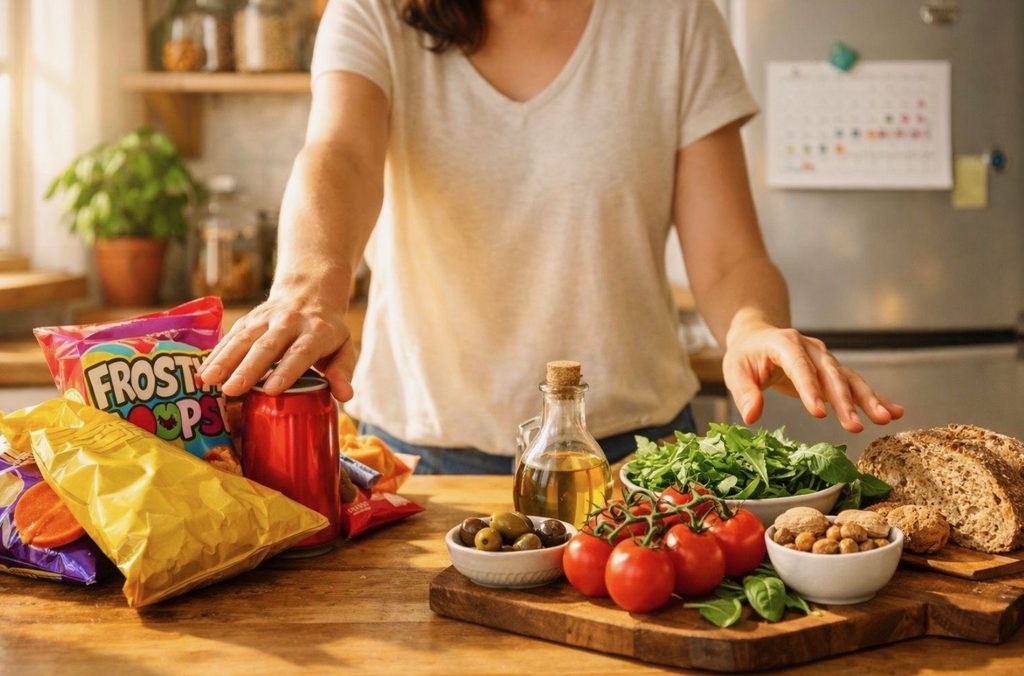
Today, many people are struggling with persistent health challenges. Brain fog, nerve pain, chronic fatigue, anxiety, depression, and other neurological symptoms are becoming increasingly common. With the constant onslaught of pathogens, environmental toxins, and everyday stressors that our bodies are up against too— many people are rethinking the Standard American Diet (SAD) and searching for ways to better support their health. Most of us agree that what we eat affects our well-being, but now more than ever, our food choices truly matter.
To make the shift away from the Standard American Diet easier, I’ve outlined a few practical steps you can follow to gradually build healthier eating habits.
Step 1: Start slowly
It’s important to approach dietary changes with patience. A common mistake is trying to change everything at once, which often leads to frustration and overwhelm. Instead, begin by eliminating one category of an unhealthy food at a time. For example, you might start by cutting out fried foods, sugary snacks, or caffeine.
Remember, food is deeply tied to comfort and routine. Many of us have emotional connections to certain dishes we grew up with or rely on foods for comfort during stressful times. There is a natural grieving process that can happen when we leave certain habits and routines behind. Take it slow. Recognize this process as a form of gentle transition rather than a harsh restriction.
Step 2: Remove the most harmful foods first
To see noticeable improvements, it’s helpful to focus on foods that are particularly harmful – those that feed viral and bacterial pathogen’s or put extra strain on the liver. These include:
Foods that feed pathogens:
Eggs, dairy, gluten, corn, soy, canola oil, MSG, artificial and natural flavors, citric acid, beet sugar, farmed fish
Foods that burden the liver:
* Highly processed foods
* Foods full of preservatives
* Pork
* High fat meals (Yes, even healthy fats!)
You don’t need to remove all of these at once unless you are facing a serious health concern. For most people, gradually eliminating these foods overtime makes the transition more manageable and sustainable
Step 3: Find new recipes that work for you
One common mistake when transitioning away from the Standard American Diet is trying to switch immediately to unfamiliar foods that feel foreign or unappetizing. You don’t have to give up all of your favorite flavors and textures at once. Instead, find healthier versions of the foods you enjoy.
For example, swap a traditional pizza crust for a gluten-free option and use a nut based cheese instead of mozzarella. Make homemade tomato sauce with fresh tomatoes, a little honey or maple syrup and your favorite herbs. Try air fried sweet potato fries instead of deep fried french fries.
If it feels daunting at first to completely give up some of your favorite less supportive foods, start by crowding them out with healthier options like fruits, leafy greens and vegetables.
With an open mind, a little extra time and creativity, you can re-create many of your favorite meals in ways that nourish your body rather than deplete it. Over time, you’ll also find new recipes and flavors that excite you.
Step 4: Honor your transition
It’s important not to skip or rush your old way of eating entirely. Transitioning gradually allows your body and taste buds to adjust, and it makes the change more sustainable. Know that it may take months or even years to fully adapt to a healthier diet and that’s perfectly OK.
Reaching out to friends, family, or online communities can make this process easier too. Having support helps you stay motivated, provides recipe ideas and reduces the temptations to revert to old habits. Even if you need to start alone, know that it becomes easier as you establish new routines and habits.
Every small step toward better nutrition matters. Start where you are. Even small changes made with consistency can lead to powerful results over time. You just need to begin somewhere. With each step, you’re building a healthier foundation for your future and that is something truly worth beginning.
In health and hope,
Karie